What is "El Niño"?
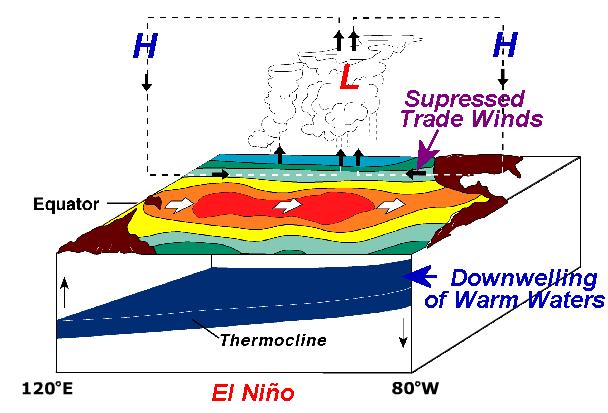
An El Niño is a natural climate pattern that happens when the surface waters in the central and eastern Pacific Ocean become unusually warm.
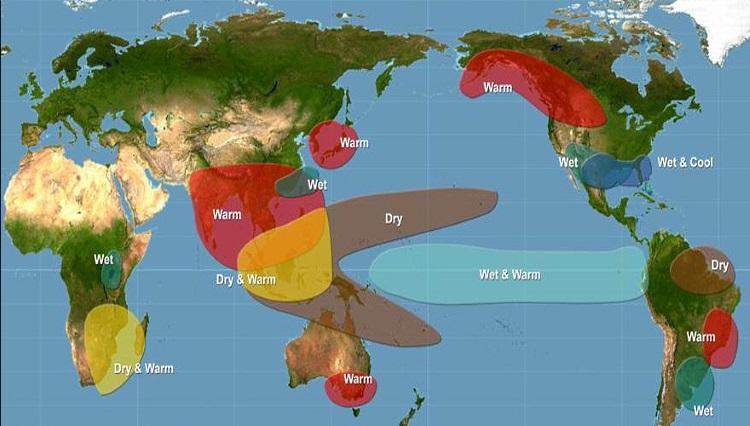
This warming changes weather patterns around the world. During an El Niño event, you might see:
- Heavier rain and flooding in places like western South America and parts of the southern United States
- Drier conditions and droughts in places like Australia, Indonesia, and parts of Asia
- Changes in hurricane activity, fishing, and global temperatures
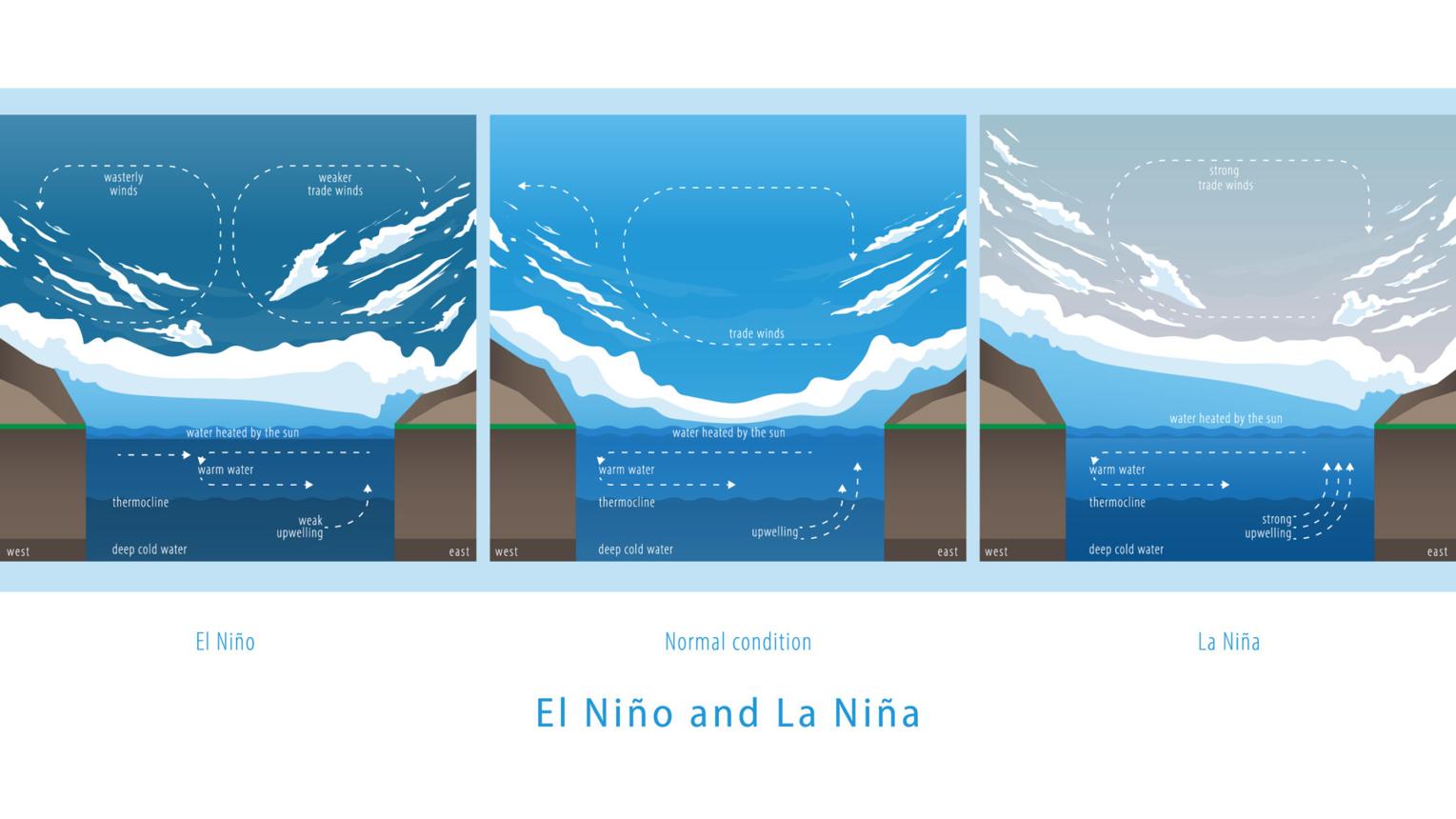
El Niño is part of a larger cycle called the ENSO cycle (El Niño - Southern Oscillation), which has three phases:
- El Niño: warmer Pacific waters
- La Niña: cooler Pacific waters
- Neutral: average conditions
El Niño events usually occur every 2-7 years and can last from several months to over a year.
Here's a simple way to think about it:
- Normally, trade winds push warm water toward Asia.
- During El Niño, those winds weaken, allowing warm water to spread eastward toward the Americas.
- That shift affects the atmosphere and changes weather worldwide.