LIGHTSPEEDWEATHER.COM
How soon will it feel like spring in most of the US?
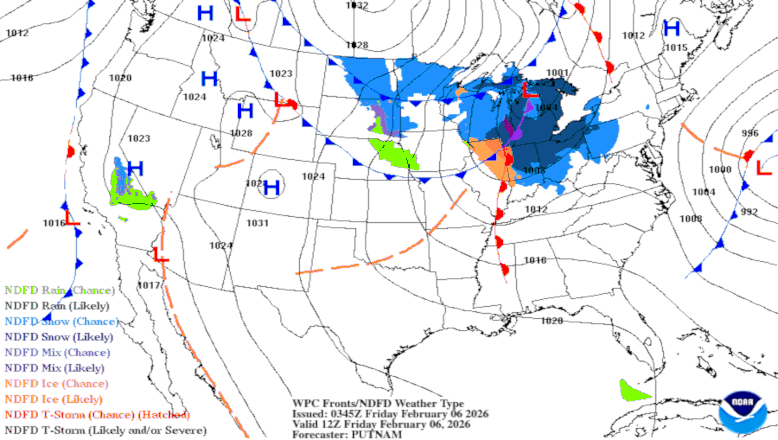
1. Spring won't feel widespread yet in early February
Many regions, especially the Mid-Atlantic, Northeast, and Midwest, are entrenched in winter cold - and traditional predictors (like Punxsutawney Phil) even suggested extended winter into mid-February.
- Forecast models show winter-like conditions lingering before a pattern shift around mid-February brings milder air to some areas.
- However, these early warm periods can be temporary, with cold snaps still possible.
2. Southern and Southwestern U.S. may see spring-like warmth earlier
- Parts of Texas, the Gulf Coast, and Southwest often see springlike temperatures (60s-70s °F / ~15-25 °C) by February or early March.
- But early warmth doesn't always last and can be followed by cooler weather.
3. The broader "spring feel" across most of the U.S. tends to settle in from mid- to late March
- Climatologically and historically, average temperatures rise above cool winter conditions around mid-March for much of the country.
- Many long-range forecasts (e.g., AccuWeather) expect stronger and more sustained springlike warmth after March 10-20, with lingering winter in some northern and central areas even into late March.
- The astronomical start of spring (spring equinox) is March 20, 2026, but weather often warms weeks before or after that.
4. Regional differences matter
- Southeast & Southern Plains: tend to feel like spring earlier (late February to early March).
- Midwest & Northeast: often see truly springlike stretches more regularly in late March to early April.
- Western mountains and high elevations: may still see cool weather and snow well into spring.
In summary:
- Some areas (South/Southwest) may feel like spring as early as February.
- Most of the U.S. usually enters consistent springlike warmth between mid-March and late March.
- Cold snaps and variability can still occur even then, especially in the northern states and higher elevations